
Healthy and affordable food: a basic requirement, not a luxury
Healthy and affordable food is a basic requirement for a resilient society. With global population growth, demand for food will continue to rise in the coming years. However, the way in which countries and regions are tackling this challenge varies considerably. In many parts of the world, the focus is still on scaling up, intensifying and further concentrating agricultural production within large companies. In Western Europe, however, we are seeing a clear shift. Driven by social pressure, stricter environmental regulations and economic reality, people here are increasingly opting for a different approach: more attention to improved animal welfare, sustainability and less impact on the environment. The challenge here lies much more in optimising business operations than in increasing numbers in order to remain profitable.
Animal welfare as a distinguishing factor
Animal welfare is receiving increasing attention in the debate on a more sustainable food system. It is striking that this is not only leading to stricter standards, but also to greater diversity in the way animals are kept. It is precisely this variety that offers opportunities: for farmers to distinguish themselves, and for chains to respond to specific market segments.
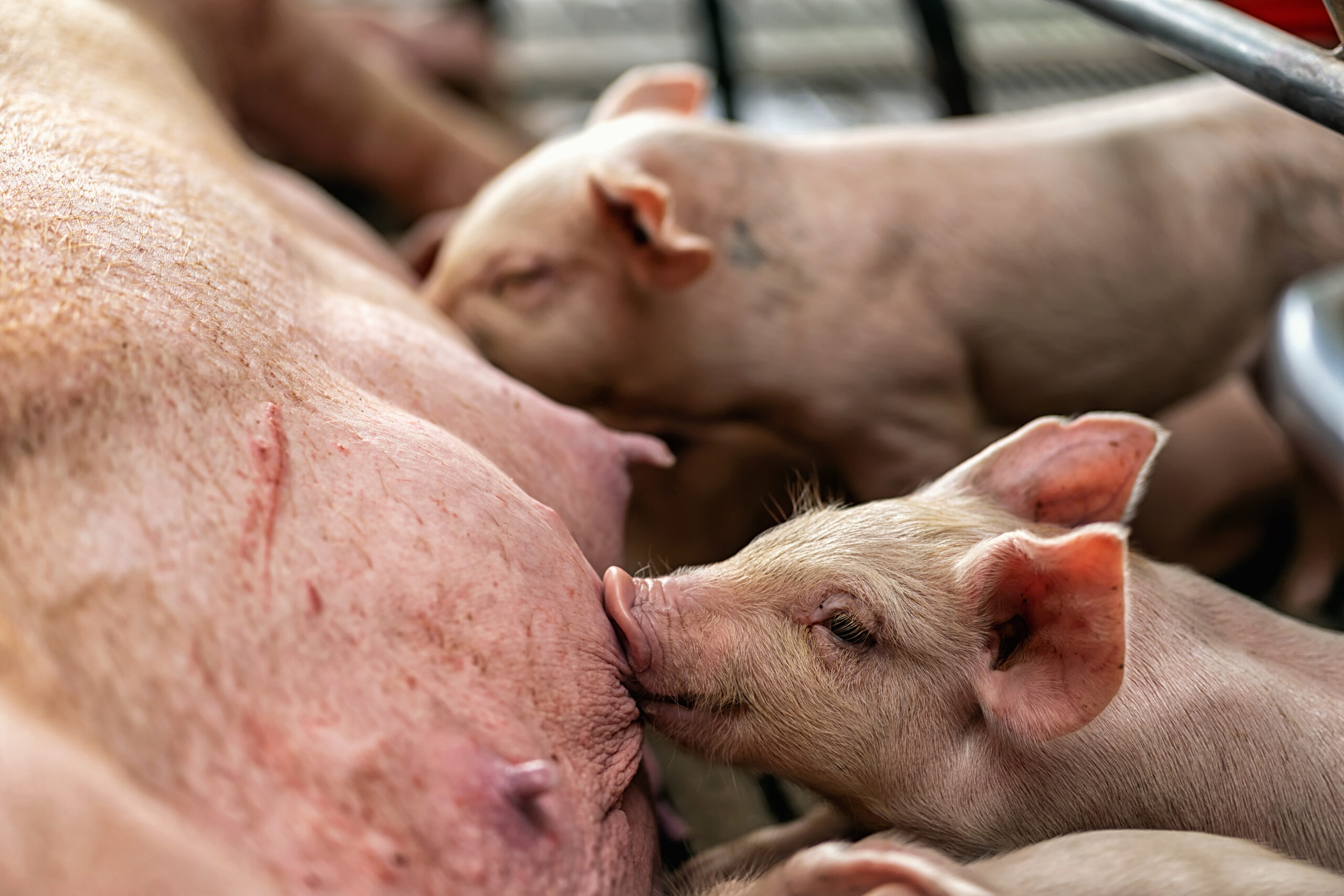
When we get down to basics, animal-oriented working boils down to one simple principle: animals should be subjected to as few unnatural actions as possible and be able to exhibit natural behaviour as much as possible. In practice, this mainly means: more space per animal, the ability to move freely (with or without outdoor access), the use of bedding and the avoidance of physical interventions such as tail docking or beak trimming.
Food production in harmony with the surroundings and the environment
Due to the increasing demand for space, rural areas, urban areas and nature are becoming increasingly intertwined. Whereas odours, dust and emissions – such as ammonia – used to be considered “part of the deal”, they are now increasingly perceived as a nuisance. Social acceptance of livestock farming is therefore no longer a given.
For entrepreneurs, this means that the right to produce – the so-called licence to produce – is increasingly linked to limiting nuisance, providing transparency and taking responsibility. The trend in legislation and regulations is shifting towards target regulations: companies are allocated emission rights and are assessed at the end of the year on their actual emissions. If the standard is exceeded, there are consequences.
A reliable and effective emission reduction system in the barn is therefore essential. Monitoring and proper maintenance are crucial to meeting the requirements. In many cases, permanent measurement of emissions is even mandatory. A temporary shutdown of the system can then immediately lead to emission rights being exceeded – with all the consequences that entails.
The solution lies in synergy
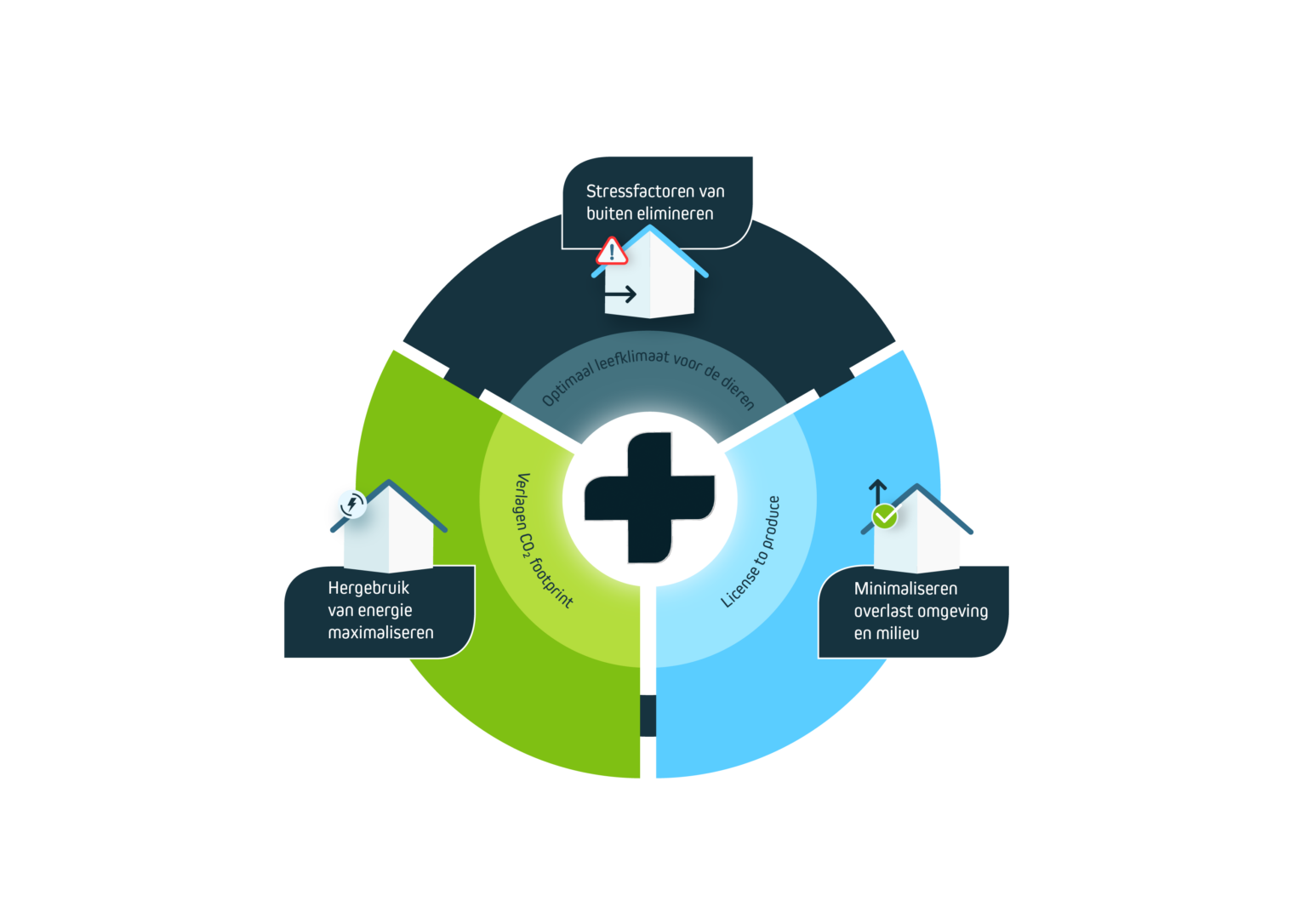
The transition to a more sustainable food system does not require a single golden solution, but rather a smart combination of insights, innovative techniques and responsibilities. Animal-oriented working practices, emission reduction, energy efficiency and social integration are not separate issues, but are inextricably linked. It is precisely this connection – this synergy – that holds the key to progress.
Synergy+ stands for a total solution in which we combine challenges in the field of animal welfare and nuisance to people and the environment with better returns and job satisfaction for the entrepreneur.